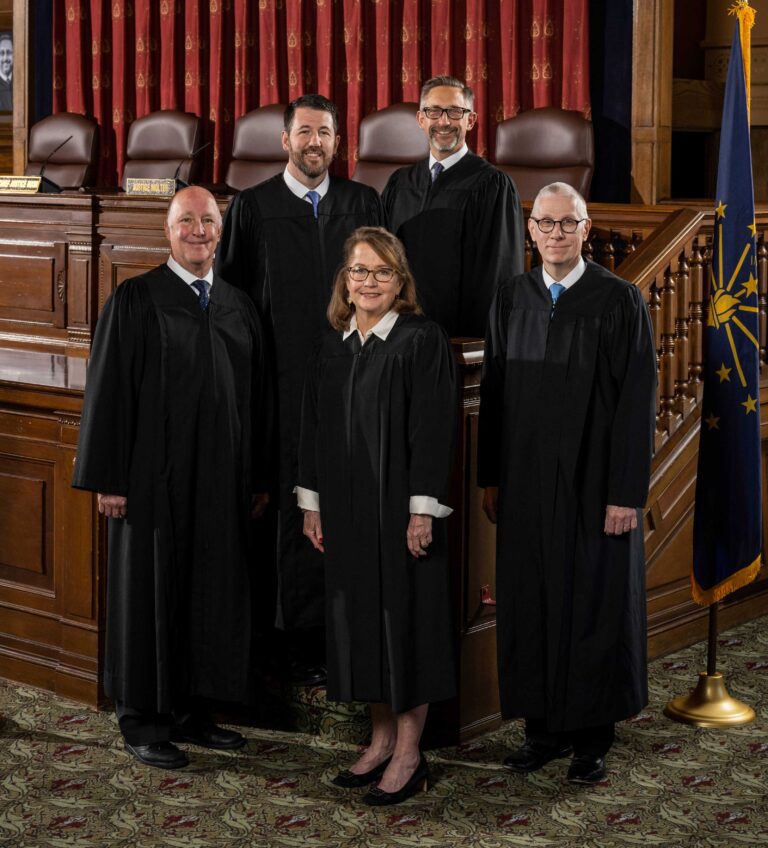


Today, Chief Justice Loretta Rush is known as a trailblazer— the first woman to serve as Indiana’s chief justice, a national leader in judicial reform and a fierce advocate for children, families and access to justice. But to truly understand her leadership, you must look beyond the titles and into the quieter, steadier rhythms of her life: a childhood shaped by constant movement, a home filled with faith and resilience, a career built not on ambition alone but on service and a heart that has never stopped making room for others.
A Childhood on the Move
Loretta Rush was born in 1958 in Pennsylvania, but “home” was a fluid concept growing up. Her father worked for the railroad, a job that required her family to move nearly every year. By the time she reached adulthood, she had lived in 16 different places.
That kind of childhood can leave a mark. For Loretta, it meant learning early to adapt, observe and read a room. Each new school brought fresh introductions and unfamiliar faces. She was shy. She also had a speech impediment—an added challenge when teachers went up and down the aisles asking children to introduce themselves.
Yet those early experiences quietly forged skills she would rely on later: empathy for the outsider, sensitivity to vulnerability and an ability to acclimate without losing herself. Moving constantly taught her how to listen first, how to understand before speaking and how to stand steady even when everything around her shifted.
Eventually, her family landed in Indiana when her father began selling school buses. It would become the place where Loretta put down roots, built a family and found her life’s work. That transient upbringing, once a challenge, became the soil from which her empathy and endurance would bloom.

Finding Her Voice & Her Calling
Loretta did not grow up dreaming of becoming a judge. In fact, she had never met a lawyer or a judge before law school. She entered Purdue University intending to become an engineer, supported by a scholarship and a strong academic record, but she soon realized something was missing.
She wanted to think, to question, to explore ideas beyond equations. Philosophy, history, government—these were the subjects that lit her up. So she pivoted, changing majors and eventually earning a degree in sociology, history, economics and government, with a minor in business.

That willingness to change direction became one of her defining traits.
During college, Loretta also found her voice as an advocate. Even before she held a gavel, she was challenging systems, advocating for equality and refusing to accept “that’s just how it is.” She ran track, swam and wrote for the school newspaper, speaking out when women athletes were denied the same recognition as men. The injustice was small by some standards—a missing letter jacket—but it mattered. And she spoke up.
“I always tell young women not to get hung up on where they start,” she says now. “You probably won’t end there.”
On a whim—and encouraged by friends— she took the LSAT. Soon after, she found herself at Indiana University’s law school in Bloomington, captivated by constitutional law and the power of a then 200-year-old document that had shaped centuries of justice.
What resonated most wasn’t prestige. It was purpose.
The idea that law could bring clarity to chaos, resolution to conflict, dignity to people who felt unseen—it stayed with her.
Love, Faith & Life Built Together
Loretta met her husband, Jim, during her junior year of college at a sorority dance. Independent and driven, both pursued their own paths while supporting each others’ callings. She thought, at first, that he might become a priest. Years later, that instinct proved true in another way—Jim is now a deacon in the Catholic Church.
They married in 1982, while Loretta was still in law school, beginning a partnership that has spanned for more than four decades. Their marriage has been rooted in shared faith, mutual respect and an understanding that vocation takes many forms.
Together, they built a family marked by both joy and heartbreak. After enduring the pain of a stillbirth, they adopted their son Jake as an infant. Soon after, they welcomed daughters Mary and Sarah—three children in diapers at once while Loretta worked as an associate attorney. Several years later, they welcomed Luke, their youngest son, to the family.
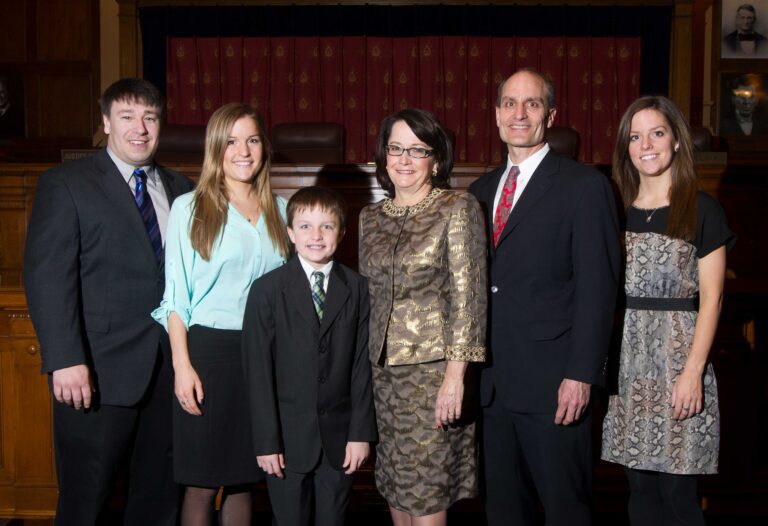
“It was chaos,” she says with a laugh. “You just roll with it.”
But even then, she was intentional. When one of her children needed physical therapy, Loretta reduced her work schedule. She planned court around track meets and swim meets. Homework happened side by side. Presence mattered more than perfection.
To her children, she wasn’t just a mother in title—she was a mother in presence. And that, Loretta would say, is the legacy that matters most.
Choosing Service Over Comfort
After 16 years in private practice—many of them as the first woman partner at her firm—Loretta felt a pull toward something more. She had already devoted countless hours to pro bono work, representing women at shelters, children in foster care and families navigating crisis.
When community leaders encouraged her to run for juvenile court judge, she hesitated. Like many women, she hadn’t envisioned herself in the role until someone else suggested it.
Then she stepped up.
As a juvenile judge, Loretta Rush transformed lives not through leniency or severity alone but through respect. Respect became her courtroom’s cornerstone and restoration its quiet mission. She believed that accountability and compassion could coexist. She developed programs for truancy, substance abuse and rehabilitation. She partnered with schools, law enforcement and social services to build systems that worked for children—not against them.
Her courtroom walls were filled with drawings and pictures of children who passed through her court. Years later, some of those children would recognize her at the Statehouse and proudly say, “You were my judge!”
Under Pressure Yet Anchored in Faith
Just weeks after being elected judge, tragedy struck. A child she had previously advocated for —now an adult she had not seen or heard from in several years—broke into the Rush family home. Deeply traumatized and suffering from mental issues, he violently attacked her husband. Loretta rushed her children upstairs to hide and then was seriously injured jumping out of a second-story window to get help. A neighbor, the late Doug Eberle, aided her husband in detaining the intruder until the police arrived. Her family was shaken.
In the aftermath, their home was filled with therapists, priests and loved ones. Healing was slow. But her faith never wavered.
When she later asked her children what they remembered most from that terrifying night, her daughter answered simply: “I was just upstairs praying.”
Loretta sought therapy. She leaned on her husband’s spiritual strength. And she returned to the bench more committed than ever to protecting children, families and the rule of law.
“You can’t let evil win,” she says quietly. Instead, she let love lead— into healing, into purpose, into fiercer protection for those most vulnerable.
A Reluctant Trailblazer
In 2012, when Indiana had no women on its Supreme Court, Loretta applied—again without expectation. Her mother, then living with her, reviewed the application with a mix of pride and disbelief.
Loretta was appointed. Soon after, her mother passed away.
When the chief justice position opened a year and a half later, Loretta once again hesitated. She was the newest justice. But she applied.
That’s when “Under Pressure” played.
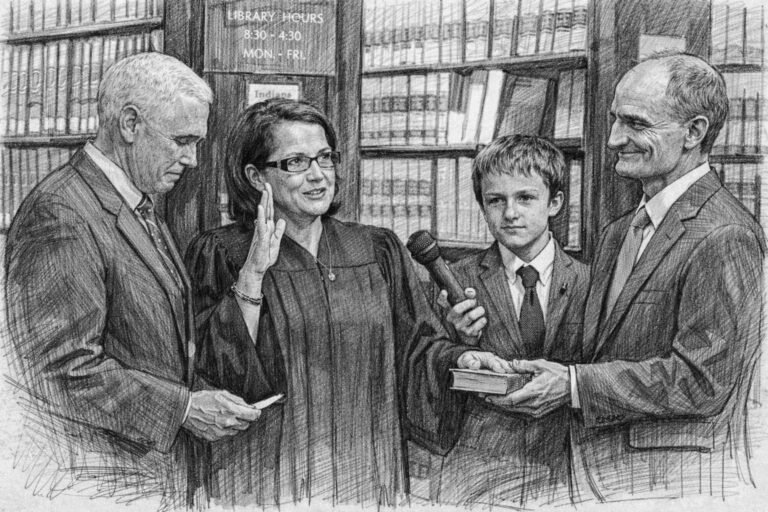
Since then, she has been reappointed chief justice multiple times, served as president of national judicial conferences and represented the United States abroad, studying justice systems across the world. Everywhere she goes, she carries the same conviction: Justice must be accessible, humane and grounded in dignity. She never chased titles— but when called, she answered with quiet courage.
When the Judiciary Faces Violence
In January 2026, another chapter of pressure and protection unfolded in Tippecanoe County, when longtime Tippecanoe Superior Court 2 Judge Steven P. Meyer and his wife, Kimberly Meyer, were shot in their Lafayette home in a targeted attack that stunned the legal community and the public alike. The shooting occurred in broad daylight and left both Judge Meyer and his wife injured; they were hospitalized and treated for wounds before beginning recovery. The incident triggered a multiagency investigation and a series of arrests of people who were charged with attempted murder and conspiracy related to the attack.
Chief Justice Rush responded swiftly and with conviction. Within hours, she issued a statewide message to fellow judges, expressing deep concern for the Meyers’ wellbeing and condemning violence against members of the judiciary and their families as “completely unacceptable.” Rush emphasized the importance of safety for judges as they carry out their duty to uphold the rule of law and called for vigilance regarding personal security.
In the days that followed, Chief Justice Rush took practical steps to support the court system’s continuity and its officers’ sense of safety. She presided over a judicial security webinar attended by nearly 200 Indiana judges alongside security experts, highlighting ongoing efforts to improve protections for judges and court staff in the wake of the shooting. The Supreme Court also moved promptly to appoint a special judge and senior judges to ensure that cases in Tippecanoe Superior Court continued without interruption while Judge Meyer recovered.
Rush’s leadership in that moment— combining compassion, concern for community safety and decisive administrative action—reflected a deep commitment to both the people who serve in the judiciary and the citizens whom they are sworn to protect.
A Life Still Expanding
At home, Loretta is now a grandmother to five. She cooks, travels, attends Broadway shows and plans Paris trips with her grandchildren. She takes annual retreats to refill her spiritual well.
Each morning begins in silence and prayer—because, she says, if she isn’t centered, she can’t lead others well. She mentors young women relentlessly, reminding them not to wait for permission, not to chase perfection and not to underestimate their own resilience.
“Don’t be so hard on yourself,” she says. “You’ll miss the magic if you are.”
Under pressure, Loretta Rush didn’t break—she became a refuge—for justice, for family, for faith.
And that may be her greatest legacy of all.